Phantom Blade Zero Weapons
Short answer: Phantom Blade Zero has more than 30 main weapons and 25 Phantom Edges, and you carry two of each. Weapons are not cosmetic variants — switching between them refills your Sha-Chi bar, so the loadout is the stamina system. Most weapons drop from bosses, and upgrades are refundable.
See the weapon system in motion
The system in four rules
- Two main weapons, two Phantom Edges. Swap mid-combo; the second slot is a resource, not a backup.
- Switching refills Sha-Chi. That is why loadout choice defines your damage ceiling more than raw stats.
- Weapons come from bosses. The director's phrasing was that there are about as many bosses as weapons — you build the arsenal by clearing encounters, not by shopping.
- Upgrades are resettable. Reforging refunds invested materials, so experimenting costs time rather than permanence.
Weapon families
| Family | Character |
|---|---|
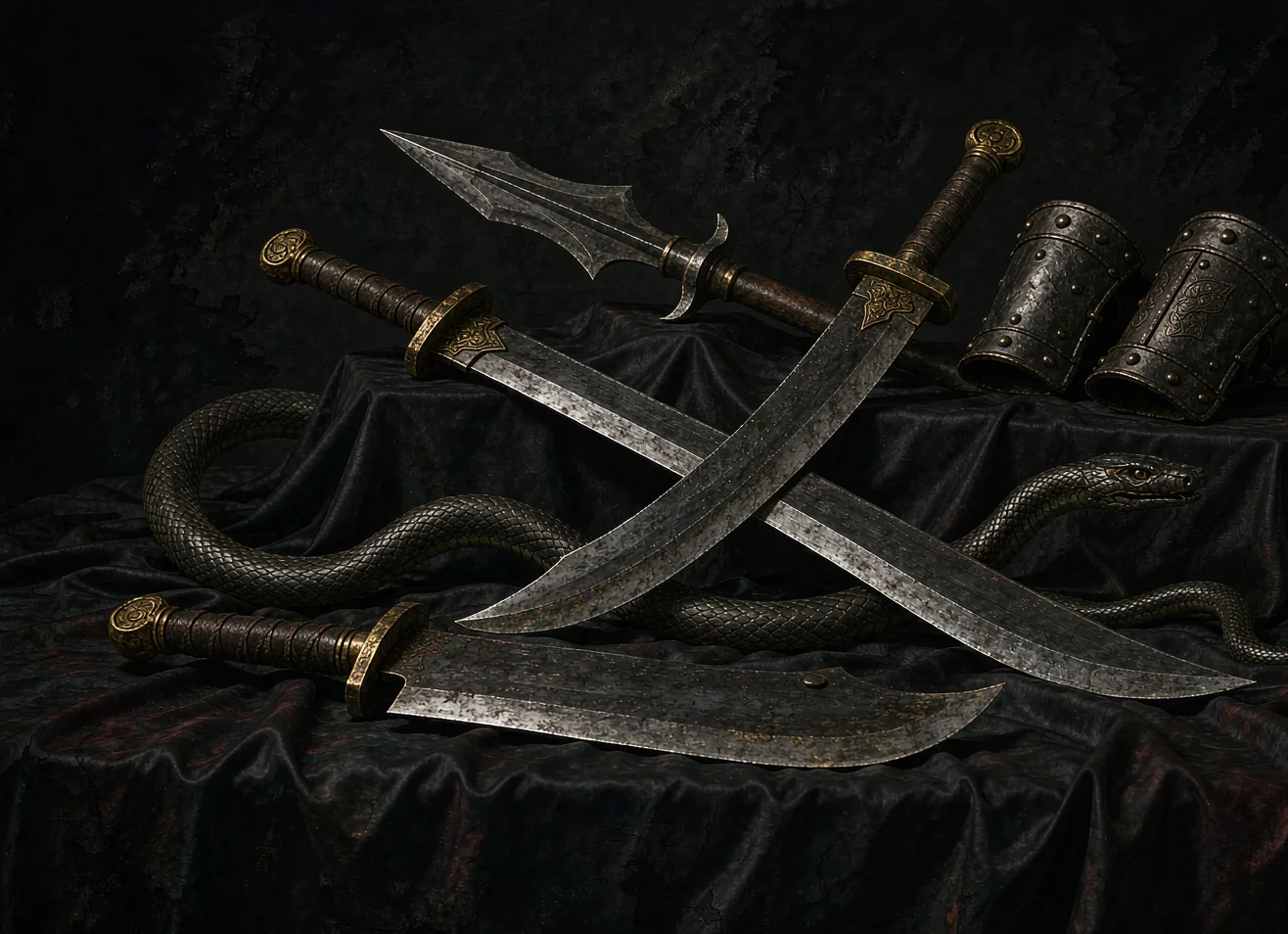
| Single-edge blades (Sanguine line) | Soul’s starting family — cleaver-weight swords that build a Bleed meter. Sanguine, Sanguine Twin and Sanguine Reach all sit here; Sanguine also has a polearm form. |
| Twin / dual blades | White Serpent and Crimson Viper are the showcase pair — fast Sha-Chi generation at the cost of reach. |
| Soft / snake swords | Soft Snake Sword is the parry specialist: successful parries build Red Edge stacks that a heavy weapon can then spend. |
| Heavy impact | Axes and hammers traded for speed; best used to cash in stagger windows opened by a faster weapon. |
| Unarmed / iron fists | Close-range stagger tools with short reach and high Sha-Chi break. |
| Ranged & exotic | The Bow of Silent Wind is a Phantom Edge that can serve as a primary — its charged shot ignores armour for one Sha-Chi bar. |
Individual weapon names come from launch-week guides rather than an official compendium. Names and move sets are cross-checked before we publish a ranking, which is why this page carries a verification note.
Every weapon, in action
Reading about a weapon family only goes so far, because the reason to swap is tempo: two blades that look similar on paper can have completely different recovery windows. The showcase is the fastest way to see how a weapon actually moves before you spend materials reforging into it.
Phantom Edges are not just gadgets
The 25 secondary weapons function as tools: traversal, armour breaking, crowd control, and in one case a full ranged primary. Two equip slots mean a typical loadout pairs one combat Edge with one utility Edge — a grapple-style tool for exploration plus something that answers guard-heavy enemies. Because regions are gated Metroidvania-style, some Edges are progression keys rather than optional extras; if a route looks impassable, you are usually missing an Edge, not a key item.
Is there a katana?
No — and this is a common mismatch. Soul's signature blade is Sanguine, a wuxia cleaver-weight sword with an alternate polearm form, not a Japanese katana. The roster is built from Chinese martial-arts weapon families: single-edge blades, snake swords, twin sabres, spears, axes and iron fists. If you searched for “katana”, the closest equivalents are the single-edge sword line.
What is Juggernaut?
A defensive weapon rather than a boss. Its heavy attack spends the Red Edge stacks that a parry-focused weapon like the Soft Snake Sword generates, which makes the pair a coherent loadout: parry to build, swap to cash in. Do not confuse it with Wanjun the Great Hammer, the large early boss.
Blood-Steel Form is an outfit, not a weapon
A categorisation fix worth stating plainly: Blood-Steel Form is one of the two Digital Deluxe cosmetic outfits (with Wulin Legend), not a weapon or a combat form. It has no stats and cannot be earned in game. Details live on the editions page.